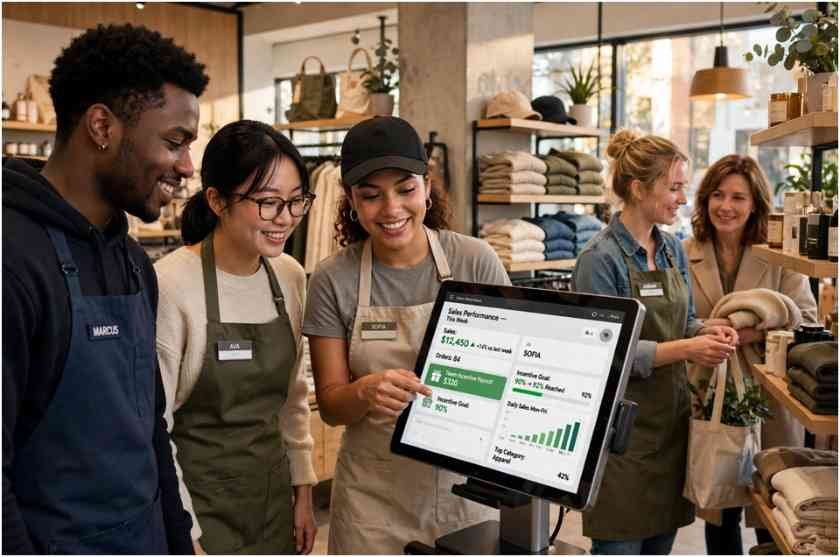
When I took over operations for a regional retail chain, our stores were bleeding cash through frontline attrition. Hourly workers checked out mentally by mid-shift, inventory gathered dust, and store leaders spent every Monday training replacements instead of driving conversions. The missing piece was obvious: our team had zero stake in our daily wins.
Implementing structured incentive compensation programs for hourly retail workers changed our trajectory, driving individual productivity up double digits while cutting chronic churn.
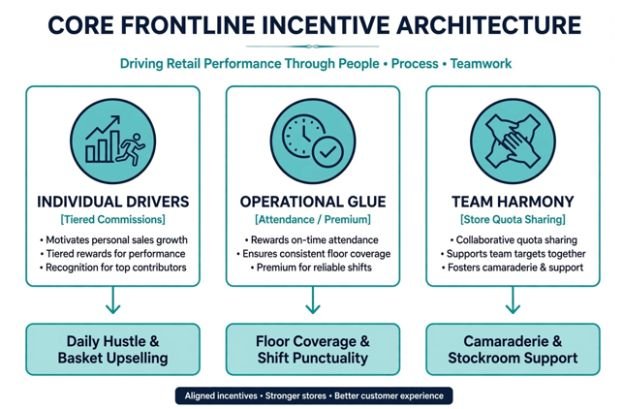
+————————————————————————-+
| CORE FRONTLINE INCENTIVE ARCHITECTURE |
| |
| INDIVIDUAL DRIVERS OPERATIONAL GLUE TEAM HARMONY |
| [Tiered Commissions] [Attendance / Premium] [Store Quota Sharing] |
| │ │ │ |
| ▼ ▼ ▼ |
| Daily Hustle & Floor Coverage & Camaraderie & |
| Basket Upselling Shift Punctuality Stockroom Support |
+————————————————————————-+
Traditional corporate bonuses fail on the retail sales floor. Store associates live in four-to-eight-hour operational blocks; they do not care about quarterly EBITDA projections. Frontline incentive programs must deliver direct, predictable returns tied directly to shifts.
The Economics of Rewarding Frontline Retail Staff
Retail operations consistently face frontline turnover exceeding 60%, according to data compiled by the U.S. Bureau of Labor Statistics. Every time a cashier or sales associate walks out the door, replacement onboarding drains store profitability.
Designing compensation for hourly workers requires managing labor ratios. Store managers need to constantly calculate labor cost percentage against daily gross revenue to ensure commission payouts do not erode departmental margins.
Balancing Gross Margins and Shift Motivation
Frontline plans must pay for themselves out of incremental gross profit. If an incentive targets add-on sales, fund that bonus from the expanded margin of the accessory, warranty, or bundle rather than flat hourly budgets. Research highlighted in the Harvard Business Review shows that performance rewards succeed when workers clearly see the direct line between individual effort and measurable reward.
When leaders evaluate the true cost of employee turnover in hourly jobs, they realize that keeping top performers engaged via performance pay is far cheaper than running continuous job listings.
4 Core Models of Hourly Retail Incentives
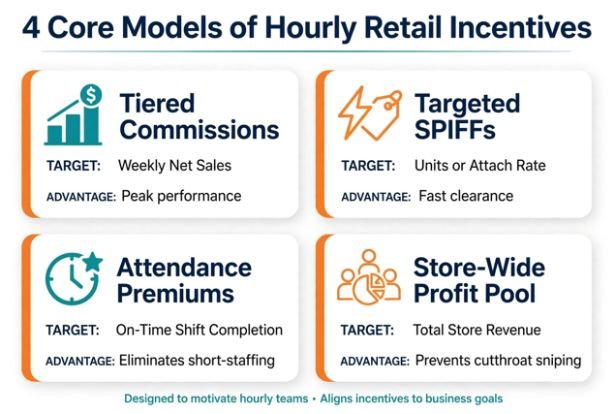
Over years of testing incentive frameworks, I found that no single bonus mechanism solves every operational bottleneck. Healthy retail stores combine these four primary models:
- Tiered Commissions: Step-up commission percentages reward sustained hustle. An associate earns 2% on their first $3,000 in weekly sales, but jumps to 5% for all sales above that threshold.
- Short-Term SPIFFs (Sales Performance Incentive Funds): Immediate payouts applied to clear aged merchandise, move high-margin private labels, or secure loyalty program sign-ups.
- Operational Stability Incentives: Direct financial rewards targeting perfect attendance, on-time shift arrivals, and weekend or closing coverage.
- Store-Wide Quota Sharing: A pooled monthly bonus distributed by total hours worked when an entire branch meets sales targets, preserving team cooperation.
| Incentive Mechanism | Target Metric | Primary Advantage | Main Operational Risk |
| Tiered Commissions | Weekly Net Sales ($) | Motivates peak performance | Risk of customer badgering |
| Targeted SPIFFs | Units or Attach Rate | Fast clearance of priority SKUs | Floor neglect of core merchandise |
| Attendance Premiums | On-Time Shift Completion | Eliminates floor short-staffing | Financial reward for bare-minimum duties |
| Store-Wide Profit Pool | Total Store Revenue Target | Prevents cutthroat sales sniping | Allows underperforming staff to coast |
Structured vs. Casual Compensation Models
Many store owners rely on spontaneous cash awards or impromptu contests. While casual incentives lift spirits on a slow Saturday, they lack long-term retention power.
Structured incentive programs rely on clear formulas published in employee handbooks. They eliminate perceptions of managerial favoritism and allow workers to mentally tally their earnings before their shift finishes.
The Overtime Compliance Trap: FLSA and the Regular Rate
The fastest way to derail an hourly incentive program is failing wage-and-hour compliance. Under the Fair Labor Standards Act (FLSA), performance-based incentives are categorized as nondiscretionary bonuses, as outlined in the U.S. Department of Labor FLSA Fact Sheet 56C.
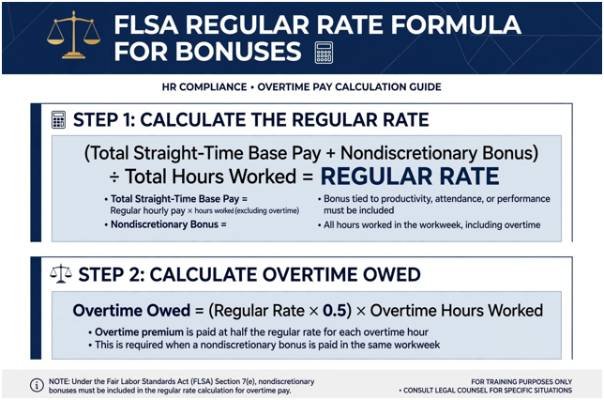
If you promise an associate an extra $100 for hitting a sales goal or maintaining perfect attendance, that bonus must be factored into their “regular rate of pay” when computing overtime. You cannot simply pay an employee their base hourly rate times 1.5 if they earned a sales bonus during a 45-hour workweek.
+————————————————————————-+
| FLSA REGULAR RATE FORMULA FOR BONUSES |
| |
| (Total Straight-Time Base Pay) + (Nondiscretionary Bonus) |
| ───────────────────────────────────────────────────────── = REGULAR |
| Total Hours Worked RATE |
| |
| Overtime Owed = (Regular Rate × 0.5) × (Overtime Hours Worked) |
+————————————————————————-+
Worked Example: The Real Overtime Cost of a SPIFF
Consider a retail sales associate earning a base rate of $15.00 per hour who works 44 hours in a week and earns a $110 product SPIFF:
- Step 1: Calculate Straight-Time Earnings
$$44\text{ hours} \times \$15.00/\text{hr} = \$660.00$$ - Step 2: Add Nondiscretionary Incentive Pay
$$\$660.00\text{ base} + \$110.00\text{ SPIFF} = \$770.00\text{ total straight-time}$$ - Step 3: Establish the True Regular Rate
$$\frac{\$770.00}{44\text{ hours}} = \$17.50/\text{hr}$$ - Step 4: Compute Half-Time Overtime Premium
$$\$17.50 \times 0.5 = \$8.75/\text{hr}$$
$$\$8.75 \times 4\text{ overtime hours} = \$35.00$$ - Total Due to Associate:
$$\$770.00 + \$35.00 = \$805.00$$
Failing to calculate this adjusted rate leaves retail businesses exposed to wage audits, back-pay demands, and statutory penalties. Configure your point-of-sale and payroll software to recalculate overtime blending automatically.
Execution Playbook: Rolling Out a Frontline Pay-for-Performance System
A poorly launched plan creates floor confusion and customer dissatisfaction. Follow this four-stage operational path to introduce incentives without disruptions:
| Phase | Duration | Core Deliverable | Success Criteria |
| Phase 1: Margin Auditing | Weeks 1–2 | Model incentive budgets against store-level contribution margins | Incentive pool costs remain under 15% of net incremental gross profit |
| Phase 2: Metric Simplification | Weeks 3–4 | Establish no more than 2 measurable KPIs per shift | Associates can calculate their earnings within 30 seconds |
| Phase 3: Pilot Store Testing | Weeks 5–8 | Launch program in a single location with high baseline turnover | Compare turnover and sales lift against non-participating control stores |
| Phase 4: Full Rollout & Sync | Weeks 9+ | Integrate tracking with digital POS terminal dashboards | Real-time scoreboards accessible to all floor staff |
Stop Paying for Warm Bodies: Build Frontline Wealth
Hourly workers leave retail jobs when their effort feels entirely decoupled from their paycheck. A flat hourly rate incentivizes presence, not performance. By structuring fair, transparent incentives that reward both individual hustle and store-wide teamwork, you turn a revolving door of temporary workers into an engaged sales engine.
Audit your product margins today, identify high-contribution categories, and run a 14-day SPIFF pilot. When your frontline team shares in the store’s upside, everybody wins.
Frequently Asked Questions
1. What is the most effective incentive for hourly retail workers?
High-frequency cash bonuses like weekly SPIFFs and tiered commissions drive the highest immediate performance lift.
2. How do incentives impact overtime calculations for non-exempt employees?
Nondiscretionary bonuses must be added to total weekly earnings to establish a higher regular rate of pay for overtime hours.
3. Can non-monetary rewards work as retail incentives?
Yes; priority shift scheduling, preferred holiday hours, and paid leadership tracks offer substantial retention value.
4. How frequently should retail incentive bonuses be distributed?
Pay out retail incentives weekly or bi-weekly to maintain a strong behavioral link between effort and compensation.
Leave a Reply