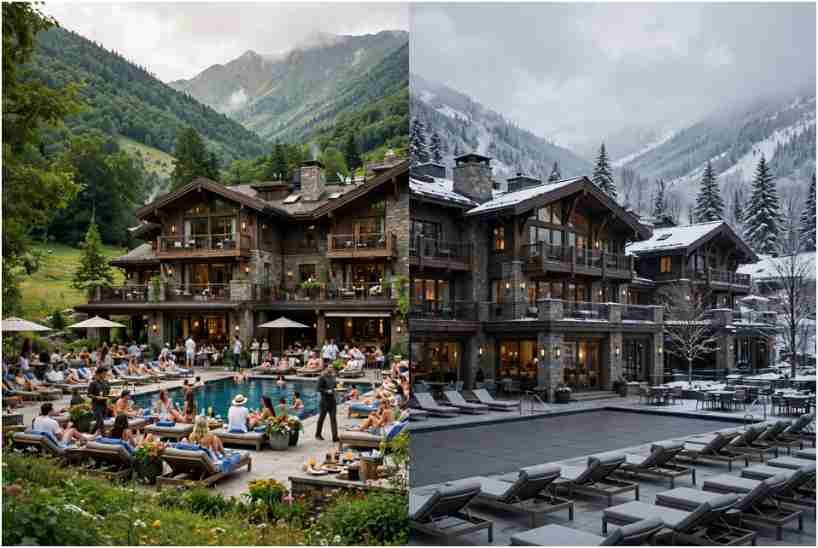
Running an 85-key boutique resort taught me an unforgiving reality: peak season covers your sins, but off-peak reveals your operational cracks. Knowing how to manage seasonal demand fluctuations in hospitality separates profitable operators from those scrambling every November to make payroll.
When your occupancy drops from 92% to 34% in three weeks, panic discounting destroys your brand. Real seasonal stability comes from operational agility, agile labor frameworks, and packaging high-perceived-value amenities that cost virtually nothing to deliver.
Dynamic Revenue Engineering (Beyond Slashing Room Rates)
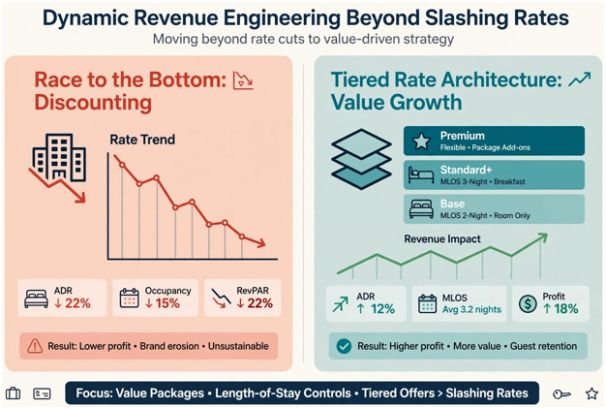
Cutting prices during the off-season triggers an immediate race to the bottom. Research from the Cornell Center for Hospitality Research demonstrates that discounting room rates below market averages rarely drives compensatory volume. Instead, it diminishes RevPAR and compromises property positioning.
I manage seasonal swings through tiered rate architecture and inventory fencing. During peak months, enforce strict three-night minimum length-of-stay (MLOS) rules. In off-peak windows, swap discounts for packaged value.
Build High-Margin Packages Using Low-Marginal-Cost Inventory
Instead of offering a room at $149 rather than $280, sell an experience bundle for $249. Populate that package with underutilized inventory: late checkouts, unused meeting spaces, and food-and-beverage credits.
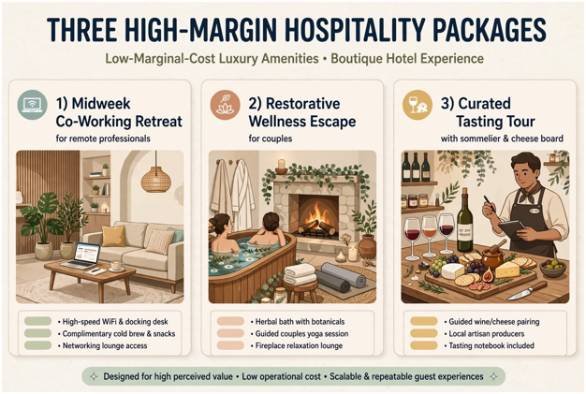
| Package Concept | Core Target Persona | Demand Gap Addressed | Low-Marginal-Cost Inclusions |
| Midweek Co-Working Retreat | Remote professionals & digital nomads | Sunday–Wednesday occupancy troughs | High-speed dedicated Wi-Fi, lobby lounge workspace, 4 PM checkout |
| Restorative Wellness Escape | Regional couples & weekend tourists | Off-season shoulder weekends | Herbal bath kits, fireside lounge access, morning yoga |
| Curated Tasting Tour | Drive-market food enthusiasts | Mid-winter weekend lulls | Sommelier masterclass, local cheese boards, kitchen dining credits |
The 30% Off-Peak Reserve Allocation
One practical system I instituted is the “30% Dynamic Reserve Sweep.” During high-occupancy months, automatically siphon 30% of net operating income into a ring-fenced reserve account.
This fund covers base property payroll, mortgage debt, and service contracts throughout the leanest quarter. It removes the stress of depending on unseasonal spikes in bookings to maintain daily operations.
Agile Labor Management and Shift Architecture
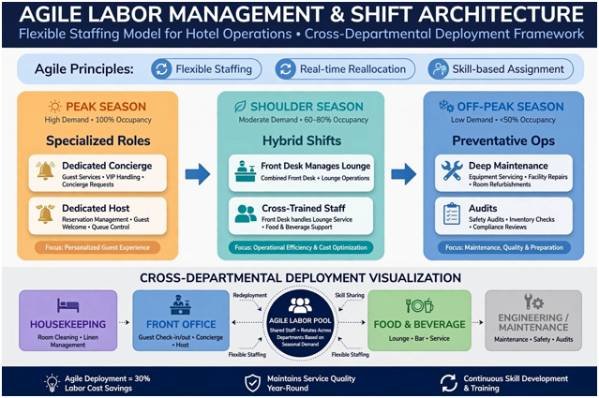
Labor remains your largest variable line item. The Bureau of Labor Statistics consistently tracks hospitality as one of the most volatile sectors for seasonal employment shifts. Relying entirely on mass hiring and layoffs ruins team morale and hikes training expenses.
Cross-Departmental Deployments
I maintain a core full-time team year-round and cross-train them across multiple operational nodes. Front desk associates learn food-and-beverage point-of-sale systems. Line cooks cross-train in basic property management receiving.
Peak Season: Specialized Roles (Dedicated Concierge, Dedicated Host)
│
▼
Shoulder Season: Hybrid Shifts (Front Desk manages lounge beverage orders)
│
▼
Off-Peak Season: Preventative Ops (Deep maintenance, audits, system setup)
This flexibility lets you preserve staff hours without carrying unneeded headcounts. Balancing these shifts also helps to prevent burnout among customer facing staff during peak months by giving them predictable, less demanding responsibilities when visitor numbers recede.
According to workforce standards from the AHLA Foundation, structured staff retention programs cut turnover by up to 24% across seasonal transitions.
Physical Footprint Compression and Operational Cost Controls
Never run an empty building at full operational load. Managing seasonal demand requires shrinking your physical footprint to match your bookings.
If occupancy sinks below 40%, mothball entire wings or floors. Close down top floors first to consolidate housekeeping routes and dial back central HVAC zones. A consolidated property reduces heating, cooling, linen, and cleaning expenses instantly.
| Operational Area | Peak Capacity Focus | Off-Peak Compression Focus | Primary Cost Savings |
| Guest Rooms | 100% room inventory open | Mothball top floors/wings | Utilities, HVAC, housekeeping transit time |
| Food & Beverage | Full menu; 16 hours daily | Streamlined menu; condensed dinner service | Food spoilage, utility loads, kitchen line labor |
| Preventative Upkeep | Rapid-response maintenance | Scheduled deep-clean & renovations | Eliminates noisy guest disruption during peak |
Reviewing food-and-beverage outlets yields immediate savings. Trimming a sprawling dinner menu down to five signature entrees cuts food waste dramatically. For additional methods on tightening back-of-house expenses during slow periods, review these proven strategies to lower operating costs in restaurant business.
As highlighted in operational analyses on Hospitality Net, systematic floor shutdowns reduce off-peak utility expenditures by up to 22%.
Frequently Asked Questions
1. What is the most effective pricing strategy for hospitality off-seasons?
Value-added packaging outperforms direct discounting because it protects your average daily rate (ADR) while leveraging zero-marginal-cost amenities.
2. How do seasonal operators avoid mass layoffs each year?
Operators retain core personnel by cross-training staff for maintenance projects and balancing shifts across multi-department roles.
3. How far in advance should an off-season marketing campaign begin?
Launch shoulder and off-peak promotional campaigns at least 60 to 90 days before your high-season occupancy declines.
4. Which guests are most likely to travel during the off-season?
Remote workers, regional drive-market staycationers, and retired travelers book off-peak dates most reliably.
Stop Bleeding Cash in the Off-Season
Seasonality is not an unforeseen crisis; it arrives on the exact same calendar date every year. Shift your mindset from surviving the winter to planning for it. Protect your baseline revenue with the 30% reserve rule, cross-train your core staff, and package irresistible local experiences instead of cutting room rates.
Pick one underutilized space in your venue today, build a high-margin package around it, and start booking your off-season calendar before the current season slips away.
Leave a Reply