I have seen talented employees remain silent even when they noticed serious problems, had promising ideas, or needed help. Their silence was rarely caused by indifference. They were calculating the personal risk of speaking. Would their manager become defensive? Would colleagues ridicule the idea? Would admitting a mistake damage their reputation?
Learning how to create psychological safety at work means removing that fear without removing responsibility. Employees should be able to ask questions, challenge assumptions, report errors, and offer unfinished ideas without expecting embarrassment or retaliation. This does not require constant agreement or comfort. It requires respectful candor, fair responses, and confidence that speaking honestly will not become a career-limiting decision.
What Psychological Safety Really Means
Psychological safety is a shared belief that a team is safe for interpersonal risk-taking. It exists when employees can say “I do not know,” “I made a mistake,” or “I disagree” without being humiliated.
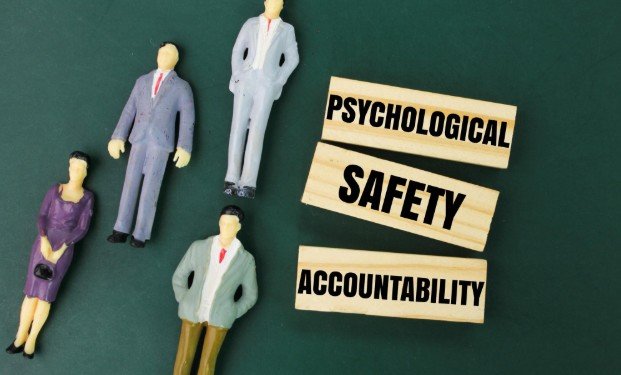
However, a safe workplace is not one where every idea is accepted or poor performance is ignored. Managers can maintain demanding standards while encouraging questions and constructive disagreement. Safety and accountability work together: employees speak honestly, and everyone remains responsible for their behavior, decisions, and results.
Recognize the Warning Signs
A quiet workplace is not automatically a healthy one. Silence can indicate that employees have learned to protect themselves. Warning signs include meetings dominated by senior people, problems reported only after they become serious, repeated agreement with managers, hidden mistakes, and employees avoiding difficult questions.
Leaders should also notice whose voices are missing. Junior employees, remote workers, new hires, and people from underrepresented groups may experience greater interpersonal risk. A team-wide score can appear positive while particular employees still feel excluded.
Make Safety an Explicit Priority

Managers should explain why employee voice matters and connect it to better decisions, innovation, risk reduction, and learning. A simple statement such as “We expect respectful disagreement because it helps us make stronger decisions” establishes a clear standard.
Teams should create shared communication agreements covering interruptions, feedback, confidentiality, disagreement, and meeting participation. These rules should be developed with employees rather than imposed without discussion. Co-created expectations are easier to trust and uphold.
Model Humility and Appropriate Vulnerability
Employees watch how leaders respond to uncertainty. A manager who pretends to have every answer teaches the team to hide uncertainty as well. Leaders can model healthier behavior by admitting knowledge gaps, asking for help, and acknowledging their own mistakes.
Appropriate vulnerability does not mean sharing every personal concern. It means demonstrating that learning is more valuable than protecting an image of perfection. Saying “I may be missing something—what do you see differently?” gives employees genuine permission to contribute.
Invite Input Before Giving Your Opinion
When the most senior person speaks first, others often adjust their answers to match. Managers can reduce this authority effect by collecting employee opinions before revealing their preferred solution.
They can ask team members to write ideas independently, use anonymous input for sensitive discussions, rotate meeting facilitators, or invite junior employees to contribute first. Remote and hybrid teams should also have asynchronous channels so that people who need more reflection time are not excluded.
Respond Constructively When Someone Speaks Up
The leader’s first response determines whether employees will raise concerns again. Interrupting, dismissing, blaming, or immediately defending a decision can silence an entire team.
A better response begins with appreciation: “Thank you for raising this.” The manager can then ask clarifying questions, examine the evidence, and explain what will happen next. Even when a suggestion cannot be adopted, the employee deserves a clear explanation. Closing the feedback loop shows that speaking up has value.
Treat Mistakes as Information
Honest mistakes should become opportunities to improve systems, training, and decisions. Instead of beginning with “Who caused this?” managers can ask, “What conditions allowed this to happen?” This shifts attention from embarrassment to learning and helps encourage employees to share ideas without fearing blame or ridicule.
A learning-focused response does not excuse negligence, repeated carelessness, or deliberate misconduct. Leaders should distinguish between a reasonable experiment that failed and behavior that ignored clear standards. Fair accountability strengthens safety because employees understand that expectations are consistent.
Encourage Respectful Disagreement
Healthy teams do not avoid conflict; they learn to manage it productively. Employees should be encouraged to challenge ideas without attacking people. Managers can ask, “What risk have we overlooked?” or “What evidence might change our decision?”
Leaders must also address sarcasm, ridicule, retaliation, chronic interruption, and idea theft. Asking employees to speak openly while tolerating punishing behavior sends a contradictory message. Harmful conduct should be handled promptly and consistently, regardless of seniority.
Measure Behavior, Not Just Sentiment
Anonymous pulse surveys can reveal whether employees feel comfortable asking for help, admitting mistakes, and challenging decisions. However, surveys alone cannot transform culture.
Managers should also monitor meeting participation, reported concerns, requests for assistance, follow-up on feedback, and how quickly problems surface. Results should be examined across teams and employee groups because psychological safety may differ according to role, location, identity, or level of authority.
After collecting feedback, leaders should communicate what they learned, identify actions, assign responsibility, and report progress. Surveys without visible follow-through can deepen cynicism.
Frequently Asked Questions
1. What is the first step in how to create psychological safety at work?
Begin by discussing what psychological safety means and asking employees which situations make speaking up difficult. Listen without defending current practices, then select one visible behavior to change.
2. Does psychological safety weaken accountability?
No. It enables employees to discuss errors and performance problems earlier. Clear standards, fair consequences, and respectful communication should remain in place.
3. How long does building psychological safety take?
Small improvements can appear quickly, but lasting trust develops through consistent responses over time. One dismissive or retaliatory response can undo significant progress.
4. How can remote teams improve psychological safety?
Use structured turn-taking, asynchronous feedback, private reporting options, clear communication norms, and regular individual check-ins. Ensure remote employees receive equal access to information and decisions.
A Safer Way Forward
I believe psychological safety becomes real in ordinary moments: when someone questions a plan, admits uncertainty, reports bad news, or proposes an unusual idea. The manager’s response teaches everyone what is genuinely safe.
Leaders who listen carefully, acknowledge their limitations, reward candor, address harmful behavior, and act on feedback create teams that learn faster and identify risks earlier. The goal is not a workplace without tension. It is a workplace where people can move through tension honestly, respectfully, and responsibly.
Leave a Reply